


| Medium of instruction: | English |
|
The Film Making course is specially designed for those students who not only want to learn film direction but additionally also want to acquire a specialized knowledge of all the technical skills that are used in film making viz -Cinematography, Sound, Editing, Acting, Production Design & Production.
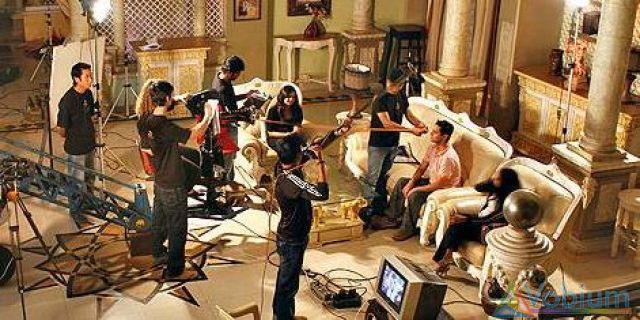
While giving theoretical & aesthetic inputs in Film Direction, we add something very important in the Film Making Course, which is - hands on, practical training in all the technical departments of Filmmaking.
The aim is to help create a very unique kind of Film Director- one who has received an all round holistic training in all the technical aspects of film making - so that s/he can rightfully claim to be not just Film Directors but Complete Filmmakers.
With this hands on, practical training in the technical departments of Film making, a prospective director becomes much more than a generalist, S/he becomes a specialist with an inside knowledge of each and every technical process of film making. Such knowledge is critical to the survival & success of new directors, since film making itself is becoming much more technical nowadays & workflows are becoming more & more complicated.
In This Course A Student Learns :
-
Film Direction
-
Screenplay writing
-
Cinematography, including lighting, lensing, camera operations & camera movements.
-
Sync Sound Recording on location including complex miking & the use of latest hard disk based multi-track recorders.
-
Editing on non-linear editing systems like Avid & FCP including media management, digitization, basic cut-to cut editing, adding transitions, adding filters, time remapping, final mastering & exporting edited material.
-
Acting, including training in facing the camera, diction & improvisation.
-
Production-Design including theory of set construction, model making & general art direction.
-
Film Production.
Instruction Module:
Most of the instruction modules for the Film Making course are similar to those of the Film Direction course. The key difference is in the emphasis given to all the technical departments viz Cinematography, Sound, Editing, and Animation and Special Effects in order to create a film director who understands the technicalities of Film Making in a deeper way.
Screenplay Analysis
Considering the fact that the screenplay is the greatest challenge in film making, our course emphasizes the central importance of screenplay. Films are analyzed in class, in terms of screenplay structure and its basic concepts are clearly laid out, encouraging students to draw from their personal experience so that their stories carry a greater degree of social and psychological authenticity. They learn about the Three Act Structure and also alternative narrative structures. They learn how to articulate the premise and identify the central conflict in a story. In the specific context of Indian mainstream cinema, students also learn how to use songs and dances effectively in a film so that they grow organically out of the plot.
Direction:
Understanding Film Language
The course assigns a huge importance to understanding film grammar with key emphasis on visual storytelling. This is achieved through a shot by shot analysis of films, where the students learn about the basic principles of cinema and the uniqueness of the Cinematic medium. They learn about narrative structure, management of time and space, dividing stories into sequences and scenes, shot-break down, continuity, Mise-en-scene, transitions and narrative flow. Major films from across the world are shown in order to open up the mind to the vast possibilities inherent in cinema. Students also learn about the history of Cinema, which gives them a deeper appreciation of movies. Irrespective of the kind of films a student wants to make in his/her professional life it is considered necessary that s/he first get exposed to all kinds of world cinema.
Mise-En-Scene
The French term 'Mise-en-Scene' came from French theatre where it literally meant all the elements 'put-in-a-scene'. Transposing that idea for Cinema, Mise-en-Scene is a set of all the creative decisions that go into the making of a shot. It therefore includes lensing, lighting, frame composition, camera movement, actor placement, action props, passive props, foreground action and background action. Mise-en-Scene is the ability to use all the above dynamic variables in order to create 'meaning' which is pertinent to the theme and philosophy of the narrative. At Digital Academy-The Film School, students are taught the art of 'Shot making' with the aim of achieving the right dramatic emphasis, the optimum use of space and the correct handling of screen time.
Cinematography
If celluloid is the paper on which the Director writes, then the camera is his/her pen. No education in film direction is complete without the ability to transpose conceptual ideas into visuals. In fact the language of cinema is primarily a visual language and cannot be learnt without a fair knowledge of cinematography. Starting off with a study of film composition, lighting pattern and different types of camera movements that powerfully bring out the story, students get hands-on experience with DV Cams, Digital cameras i.e. Red, D55 and more as well as exposure to film cameras.
Theory & Practical sessions:
-
Image formation and Introduction to still photography.
-
Visual Grammar, composition, camera angles, camera movements.
-
Principle of Motion Picture Camera, Its parts and functions.
-
Film Production process and role of a cinematographer.
-
Lenses and their effective use.
-
Filters.
-
Study of Natural light, Tools of Lighting, Indoor and Outdoor lighting.
-
Basic theory of Videography.
-
Single and multi-camera shoots, Chroma key and visual effects.
Editing
Editing is the final process in the film making workflow. Most directors discover that their films almost always get rewritten on the editing table. Editing is not just about understanding continuity or creating a 'seamless' narrative, editing begins with a larger understanding of the texture and tenor of reality that a film is proposing to create. Every shot, every cut, and every transition is governed by this tenor and texture of reality. When directors learn how to edit, they learn the secret recipe of creating reality, by manipulating time and space.
At Digital Academy-The Film School, students learn how to use the principles of editing to be able to make excellent films.
Theory & Practical sessions:
-
History of Editing to Modern Day Workflow.
-
Basic Syntax, Image Collision & Types of Shots.
-
Editing Exercises & Introduction to Basic Software.
-
Editing Scenes & Sequences.
-
Editing Exercises - Silent Continuity, Introduction to Basic Software.
-
Editing for 10-Shot Continuity.
-
Editing the Final Sound Post for the Final Diploma Film.
Production Design
Production design involves the selection of locations, erection of sets, designing of interior and exterior spaces and choosing all the physical elements that go into creating 'the look of the film'. Students are taught to communicate accurately about their ideas so as to achieve a verisimilitude between concept and execution. Films are analyzed in class in order to understand the production design behind some key films in Hollywood as well as in India in recent years
Sound
Although cinema is primarily a visual medium, sound is an extremely important element in the art of cinematic storytelling. In the hands of a good Director, Sound design is an intrinsic part of his or her narrative design. In Digital Academy-The Film School, directors are taught the importance of sound design. They are shown how different audio elements are manipulated in order to achieve the desired effect of telling the story more powerfully. Sync-sound and its advantages and disadvantages viz-a-viz dubbed sound in the Indian context are carefully discussed.
The following topics will be covered in Theory & Practical sessions:
-
Sound for Film & Television-definition.
-
Aesthetic Role of sound in Cinema.
-
Importance of Sound Design.
Physical Properties of Sound :
-
Pitch, Timbre, Frequency Range, Dynamic Range etc.
-
Subjective properties of human hearing.
-
The effect of space on sound.
-
Analogue & Digital audio signal.
Types of Microphones & Microphone Techniques:
-
Audio Mixers.
-
Digital Audio parameters.
-
Headroom, noise, distortion.
-
Production sound mixing.
-
File transfer from one format to other of Daw.
-
Analogue-to-Digital and Digital-to-analogue systems.
-
Filtering, Equalization, Echo effects, Reverberation.
-
Theatre Acoustics.
-
Home Theatre reproduction & multiplex sound reproduction.
-
Final mixed output in various formats including optical sound negative.
Handling Actors
To be able to direct actors, one ought to be proficient in the medium since actors bring out the Director's vision on screen. This course helps students learn how to effectively communicate with their actors. It teaches the finer nuances of teamwork and how to narrate a script to the actor pertaining to his/her character and helps them enhance their performance. The Director being the captain of the ship, it remains his forte largely how to take optimum performances from his team.
Animation And Special Effects In Films
Digital Academy also teaches directors about the technology involved in special effects and animation. This is because directors need to be technically conversant with the technology and the processes involved in creating special effects and animation. Without a proper grounding in this know-how directors would find themselves technically inadequate at the time of shooting or production of such films that require special effects and animation. Our aim is to give the direction students enough knowledge so that they can incorporate the specific workflows related to Special effects and Animation into their scripting, planning, and execution.
Film Production: Pre Production To Post Production
Students learn about the importance of planning during pre-production in terms of casting, storyboard, location hunting, budgeting and scheduling. Students also learn about the entire production process of filmmaking from concept to screen including the logistics of recce's, cast and crew building, set making, shooting, editing, sound post and Digital Intermediate process.
Projects
Analytic Dramatic Continuity Exercises
P1) Two Characters, Two Zones, Single Space Exercise
The students are taught how to place cameras in separate zones of the same space and how to place actors within those zones to enable grammatically correct intercutting. In other words, this exercise teaches the students, how to retain physical continuity by following the rule of 1800 axis and how to retain relational continuity by correctly making eye line matches.
P2) Three Characters, Three Zones, Single Space Exercise
The next project is simply an extension of Project 1 but with the added complexity of three characters instead of two. This additional character creates a third spatial zone and further complicates the issue of eye line matching.
P3) Four Characters, Multiple Zones, Basic Mise-en-Scene Exercise
Students are taught how to use the 3600 space using multiple space zones without causing spatial or temporal disorientation. The rules of changing magnifications as well as changing angles are also taught in this exercise.
P4) Two Characters in movement in a Single Space
Students learn how to create perfect continuity with two moving characters in a single space - moving through multiple zones. The problems of relational continuity are further complicated here.
P5) Three moving characters, moving camera in a single space and multiple zones
Students learn here the nitty gritty of managing character movement along with camera movement. The importance of repeat action shooting and retention of continuity in the 3600 arc of space is taught here along with the practice of using floor plans and story boards to create a dramatically appropriate shot breakdown.
P6) Four Moving Characters
This exercise is similar to exercise in P5 except that it uses four characters instead of three. The creative complexities and shot breakdown challenges are consequently increased.
P7) Mise-en-Scene with Two Characters
In this exercise students are taught how to use all the dynamic variables viz lensing, lighting, character movement, camera movement, and props in order to create "Cinematic Meaning".
P8) Mise-en-Scene with Three Characters
This exercise adds another character to the same creative challenge as the earlier Mise-en-scene exercise.
P9) Mise-en-Scene with Four Characters
An extension of the earlier mise-en-scene exercises with four characters. The emphasis is to make clear, the distinction between coverage of action and shot designing to create meaning. Finally, it is the ability to visually communicate multilateral meanings that distinguish a filmmaker from a recorder of events.
P10) The Final Project
The absolute highlight of this course is the Final Project in which a student gets to be a Director in one unit, a Camera person for another unit, a Sound Recordist for another unit, an Editor for another unit, & an Audio Post Engineer for another unit. This way s/he gets to take not one but multiple show reels at the end of the course - one show-reel as a director & three show-reels as a technician.
In this project, each student writes & directs a 10-minute fiction film, in accordance with the Digital Academy norms.
This exercise is what makes the Film Making course so unique and different from the Film Direction course.
Students are separated into groups or units and each group becomes a ‘rotation’ crew for each of the projects. What this means, is that the Director of one of the projects becomes a Cinematographer for the next, a Sound Recordist for another and an Editor for another. This allows the student to acquire very real hands-on experience of the creative possibilities in each of the technical departments that constitute a film crew.
At the end of this project, each student not only has a show reel as a Director but can also show his or her work as a Cinematographer, Sound Records or Editor. This unique, holistic approach ensures an all round development of faculties and truly enables an individual to call him/herself a complete Film Maker.
The Digital Academy Student Benefit
-
Compact and condensed course
-
No previous filmmaking experience or knowledge required except a passion to succeed/ for Cinema.
-
Exposure to an outdoor shoot involving different light conditions
-
Intensive workshops by top-of-the-line film professionals
-
Acquiring technical skills in all departments and gaining wholistic knowledge of the entire Film Making process and work flows
-
Writing, shooting and editing a short film to make the student's own show-reel.
A student who graduates in 'Film Making' from the Digital Academy should be in a privileged position to break into the Film or Television industry, initially as an Assistant Director and eventually as a Film Maker.
Note:- Curriculum subject to change
Faculty
We have professionals teaching our course – some of whom are mentioned below.
Any one or more of the experienced faculty can be assigned to a course batch.
Mr. Sankalp Meshram
Mr. Sankalp Meshram, after doing his Post Graduate Diploma in Editing from the FTII Pune, has been working as a Editor and Film Maker. He edited the Feature Film “Katha Don Ganpat Roanchi” in 1997 (Marathi) which won the state award for the best Film apart from being shown at various International Film Festivals and the National Award for Best Editing in the year 2001 for the Film Lokapriya. He also wrote and directed “Chhutkan Ki Mahabharat” which got him the National Award in the year 2005.
Mr. Sidharth Sinha
Sidharth Sinha graduated from the FTII as a Direction student. His final Diploma Film “Udedhbun” won the Silver Bear award in the Short Film Category at the 58th Berlin International Film Festival in Berlin in 2008, a prestige that has in the past been conferred on Indian Luminaries like V.Shantaram, Satayajit Ray, Mrinal Sen . The Film just won the Award for the best short film in the National Awards 2009. It gained a lot more recognition in festivals in both Indian and abroad.He was invited as a jury member to various international film festivals.
He is also appointed as a member in selection committee for Mumbai Film Festival(MAMI) 2009.Currently he is planning to direct his first feature film.
Mr. Rafey Mahmood
After completing his BA in Economics, Modern History & Political Sciences MA in Mass Communication, Mr. Rafey Mahmood went on to do a Post Graduate Diploma in Cinematography from the Film & Television Institute of India, Pune.
Having worked in the media industry for many years he has been the Director of Photography (DOP) for feature films like ‘Mithya’, ‘Mixed Doubles’, ‘Raghu Romeo’, ‘Katha Don Ganpatraoanchi’, ‘Journey to Mecca’ (an upcoming IMAX film produced byCosmic Pictures) and many more. He has also done the cinematography for acclaimed short films like ‘Tarana’, a 35mm Non Fiction Film on Indian Classical Music, which won the Golden Lotus Award for the Best Non- Fiction Film at the National Film Awards, and many more. He has shot around 400 Commercials for Advertising Agencies, like JW Thompson, Grey Worldwide, Mc Caan Erikson, O & M, Leo Burnett, Mudra.
He has won the Radio & Press Advertising award (RAPA) in the year 2007 for ‘Best Cinematography’ in an Ad Film for Bose Audio Systems.
Mr. Satish Bhatia
Mr Satish Bhatia graduated from FTII Pune in the year 1967 and started working as a head of the Film and Video Camera department of Doordarshan Mumbai and Delhi.
Mr Bhatia has worked as a cinematographer with reputed directors such as Hrishekesh Mukherjee, Raman Kumar, Simi Garewal, Kundan Shah etc and also has worked on News Sports and Current affairs programmes for various international television networks like Transtel (Germany), Rosselini and Associati (Rome), Sports Satellite Broadcasting ( U.K.)
He has also directed and photographed more than 100 documentaries and corporate films like Raj Kapoor, India's Rajiv, World Heritage Series "Taj Mahal".
Mr. Dev Agarwal
Dev’s passion to capture the fleeting moments and its beauty was seeded early when he was in school. He went on to complete his photography course from Society of Photographers, Kolkata in 2001. He then graduated with B.A in Mass Communication and Film Studies from St Xavier’s College, Kolkata and has done Post Graduate Diploma in Cinematography from the Film & Television Institute of India (FTII), Pune.
Now Mumbai is the city where he lives and work as a freelance Cinematographer / Director. He had worked with eminent Indian as well as International Artists and Theatre Directors. He has shot many documentaries, short fiction and corporate films.
He had shot with Discovery channel for a Travel & Living show filmed in South- East Asia (Malaysia, Philippines, Thailand & India).
His other work includes films for Reliance, Glenmark, Borosil, Hindustan Construction Company. He is the Creative Head at Purple Haze Films, and is directed a Non-Fiction Film titled “Unheard Voices and notes to myself” produced by Public Broadcasting Service Trust.
Mr. Vipin Bhati
Vipin Bhati graduated as a Sound Engineer from the FTII in Pune in 1997. Since then he has been the Location Sound Mixer for films like the upcoming Film Zokkomon (Produced by Disney), Jodha Akbar, Garam Masala, 8x10 Tasvir, Aashayein, Bombay to Bangkok, and many more. He also did the location sound for a 30 minute documentary “Vultures” for discovery channel produced by Film Republic (2003). He was also the Sound designer and technical advisor, “War And Peace” - documentary directed by Anand Patwardhan. (Winner of Best Film at Mumbai International Film Festival, 2002 and National Award for Best Documentary, 2004).
Career
It is now common knowledge that the audio-visual medium is the fastest growing medium of communication in the world. Films are made not only in the fiction format but also as documentaries, training films, corporate films, advertisements and video art. The world of films is like a mushroom cloud that keeps getting bigger and bigger.
Every Film must have a Director with a complete knowledge of Film Making. It stands to reason therefore that higher the number of films, higher will be the demand for directors. A Film Maker is an artist-technician who is also an expert manager, logistics person, coordinator and chief executive officer- all rolled into one. A Film Maker is like a master puppeteer who holds all the strings and makes illusions look like reality. It is a difficult job that requires tremendous creative energy, enthusiasm along with loads of patience and humility. A career in Film Direction is one of extreme creative satisfaction, apart from side benefits of fame and money. But only those who are ready to go through the grind and put in hard labour as well as application can succeed.
Most students of Digital Academy join the industry initially as Assistant Directors and work their way up towards the Directors post. But there is no hard and fast rule about this and if you have the capability you might well straightaway become a Director as soon as you pass out from Digital Academy-The Film School.
While careers of Film Makers are the same as Film Directors it is our analysis that Film Makers who have a complete knowledge of Film Making are generally more in-demand and sought after.
Fees
Fees for Indian Citizens Inclusive 12.36% service tax
INR: 3,37,079/-
10,000/-On admission
65,000/- Before batch starts
65,000/-Within 1 month (PDC)
65,000/-Within 2 months (PDC)
65,000/-Within 3 months (PDC)
67079/-Within 4 months (PDC)
Scholarship Fee Plan for Indian Citizens Inclusive 12.36% service tax
INR: 2,80,899/-
10,000/-On admission
54,000/- Before batch starts
54,000/-Within 1 month (PDC)
54,000/-Within 2 months (PDC)
54,000/-Within 3 months (PDC)
54,899/-Within 4 months (PDC)
Fees for International Students Inclusive 12.36% service tax
USD: 5620
Full Fees to be paid on Admission
| Classroom - Regular | ||||
| When | Duration | Where | Remarks | Price |
|
16th December, 2013 (11:00 AM - 5:30 PM) Mon, Tue, Wed, Thu, Fri |
6 Months |
All Venues | Duration: 5 days a week, 6 hours a day. |
INR 3,37,079 Per Course (Plus 12.36% Tax) |
Digital Academy
Digital Academy was the result of a simple thought; to introduce the art and craft of cinema to passionate minds.
We firmly believe in going the extra mile for all our students and hence placements are an integral part of our program. Our well-placed network has enabled us to set our students in ace film and television production houses. And it is pure pride that we wear seeing their success.
At Digital Academy we compete with ourselves to set new standards. And because we believe we can, we always achieve, for a goal is only unattainable when you give up trying. So if you have a dream, come to us and we will make it real.

