


Manipuri - Indian Dance (Basic)
Training/Coaching/Tuition by Ila Dalal Dance AcademyMumbai |
Request Info |
| Level: | Beginner/Entry |
| Medium of instruction: | English |
|
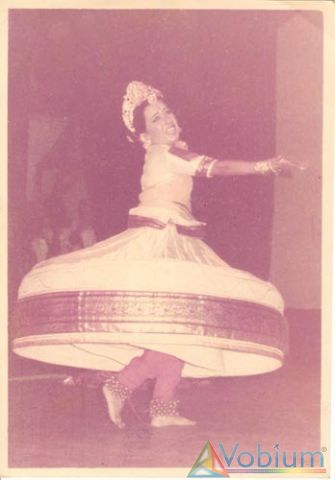
The traditional Manipuri dance style embodies delicate, lyrical and graceful movements. The aim is to make rounded movements and avoid any jerks, sharp edges or straight lines. It is this which gives Manipuri dance its undulating and soft appearance. The foot movements are viewed as part of a composite movement of the whole body. The dancer puts his or her feet down, even during vigorous steps, with the front part touching the ground first. The ankle and knee joints are effectively used as shock absorbers. The dancer’s feet are neither put down nor lifted up at the precise rhythmic points of the music but rather slightly earlier or later to express the same rhythmic points most effectively.
The musical accompaniment for Manipuri dance comes from a percussion instrument called the Pung, a singer, smallcymbals, a stringed instrument called the Pena and wind instrument such as a flute. The drummers are always male artistes and, after learning to play the pung, students are trained to dance with it while drumming. This dance is known as Pung cholom. The lyrics used in Manipuri are usually from the classical poetry of Jayadeva, Vidyapati, Chandidas,Govindadas or Gyandas and may be in Sanskrit, Maithili, Brij Bhasha or others.
A copper plate inscription credits King Khuoyi Tompok (c. 2nd century CE) with introducing drums and cymbals into Manipuri dance. However, it is unlikely that the style resembled the form known today before the introduction of Krishna bhakti in the 15th century CCE. Maharaja Bhagyachandra (r. 1759 – 1798 CE) codified the style, composed three of the five types of Ras Lilas, the Maha Ras, the Basanta Ras and the Kunja Ras, performed at the Sri Sri Govindaji temple in Imphal during his reign and also the Achouba Bhangi Pareng dance. He designed an elaborate costume known as Kumil. The Govindasangeet Lila Vilasa, an important text detailing the fundamentals of the dance, is also attributed to him.
Maharaja Gambhir Singh (r. 1825 – 1834 CE) composed two parengs of the tandava type, the Goshtha Bhangi Pareng and the Goshtha Vrindaban Pareng. Maharaja Chandra Kirti Singh (r. 1849 – 1886 CE), a gifted drummer, composed at least 64 Pung choloms (drum dances) and two parengs of the Lasya type, the Vrindaban Bhangi Pareng and Khrumba Bhangi Pareng. The composition of the Nitya Ras is also attributed to him.
This genre of dance became better known outside the region through the efforts of Rabindranath Tagore. In 1919, he was so impressed after seeing a dance composition, the Goshtha Lila in Sylhet (in present day Bangladesh) that he invited Guru Budhimantra Singh to Shantiniketan. In 1926, Guru Naba Kumar joined the faculty to teach the Ras Lila. Other celebrated Gurus, Senarik Singh Rajkumar, Nileshwar Mukherji and Atomba Singh were also invited to teach there and assisted Tagore with the choreography of several of his dance-dramas.
Guru Naba Kumar went to Ahmedabad to teach Manipuri dance in 1928. Soon, Guru Bipin Singh popularised it in Mumbai. Amongst his pupils, most well known are the Jhaveri sisters, Nayana, Suverna, Darshana and Ranjana.
IDDA offers basic course in Manipuri with Smt. Ila Dalal. (For a complete profile for Mrs Ila Dalal, please visit 'The Faculty'.)
| Classroom - Regular | ||||
| When | Duration | Where | Remarks | Price |
| Not Specified | Not Specified | All Venues |
Taught by Mrs.Ila Dalal |
Price On Request |
Mumbai, Churchgate (Branch):- 08 Vaswani Mansion Dinshaw Vaccha Road Churchgate, Mumbai - 400020, Maharashtra, India
Ila Dalal Dance Academy
Into the Soul of Nritya...
The Ila Dalal Dance Academy is dedicated toward creating greater awareness and popularity toward classical Indian Dances and encouraging individuals to make dance an integral part of their lifestyle. In addition to certificate courses and in-depth training in Indian Dances like Kathak, Bharatnatyam, Manipuri, Odissi and Indian folk dances, IDDA also offers courses in Western styles such as Latin Ballroom Dancing, Jazz, Contemporary Western and Modern Dance.
Dance is a physical and visual art form, which has an immediate and massive impact on the spectator. The various Indian forms act like a window to India's rich cultural reservoir. Dance is the form of art, where the body is used as a medium of communication. Indian dances have played an influential role in many other realms of art including poetry, sculpture, architecture, literature, music and theater all over the world.
The earliest archaeological evidence of Indian dance, which dates back to 6000 BC, depicts a beautiful statuette of a dancing girl. Bharata's Natya Shastra (which was written between the 2nd century B.C. and 2nd century A.D) is the earliest available thesis on dramaturgy. All forms of Indian classical dances owe allegiance to Natya Shastra, which is believed to be the 'fifth Veda' of the Indian culture.
According to a popular belief, Brahma, the Creator of the World, combined literature from the Rig Veda, songs from the Sama Veda, abhinaya (expression) from the Yajur Veda and rasa (aesthetic experience) from the Atharva Veda, to form natya (what we today call dance). It explains the nuances of dance, giving stress on mudras (hand formations) and their meanings, the kind of emotions and their categorization.
Apart from the abhinaya and the performance of rasa, the audience is amused by the attire and ornaments of the artist. The majority of Indian classical dance forms are focused on the depiction of the nine rasas (Navarasas or the emotions), which includes Hasya (happiness), Krodha (anger), Bhibasta (disgust), Bhaya (fear), Shoka (sorrow), Viram (courage), Karuna (compassion), Adbhuta (wonder) and Shanta (serenity).
The Indian classical dance forms are dominated by the basic elements of a performance, including abhinaya and rasa. Abhinaya is an inevitable part of the dance, since it conveys the true meaning of the performance. On the other hand, the use of rasa varies from one performance to another. The use of a particular rasa is dependent on the situation or the story of the dance performance. Go through the following lines and check out more information on the basic elements of Indian dance - abhinaya and rasa.

